Why Does My Pool Turn Green After Rain in South Florida?
A pool can turn green after rain when the water chemistry changes and the sanitizer can no longer control algae. Heavy rain may dilute chlorine, affect the pH, wash debris into the water, and place more demand on the filtration system.
The rain itself does not always create algae. Instead, it can create the conditions algae need to grow.
This problem is especially common in South Florida because the area receives frequent rain, warm temperatures, and strong sunlight. The National Weather Service identifies May 15 through October 15 as South Florida’s wet season. About 60% to 70% of the area’s yearly rain normally falls during that period.
Knowing what happens after a storm can help you respond before the water becomes dark green, cloudy, or difficult to clear.
Why Does Rain Affect Pool Water?
Rainwater changes the amount and makeup of the water inside your pool. A light shower may have little effect. A long storm or several rainy days can cause a larger change.
Common effects include:
- Lower sanitizer levels
- Changes in pH and alkalinity
- Leaves, soil, pollen, and debris entering the pool
- Extra water that dilutes treatment chemicals
- More work for the pump and filter
- Organic material that uses available chlorine
When chlorine levels fall, algae may begin to grow on pool walls, steps, corners, and other areas with weaker circulation.
Warm water and sunlight may help the algae spread faster. By the time the water looks green, the chemistry may have been out of balance for several hours or days.
The Main Reasons a Pool Turns Green After Rain
1. Rain Dilutes the Chlorine
Chlorine helps control germs and algae in pool water. Heavy rain adds untreated water to the pool and may lower the amount of active sanitizer.
The Centers for Disease Control and Prevention recommends keeping pool pH between 7.0 and 7.8. The typical chlorine range is 1 to 4 parts per million, although pool owners should also follow product and equipment instructions.
When chlorine falls below the level needed for the pool, algae can begin to grow.
2. The pH Moves Out of Range
Pool chemicals work together. A chlorine reading alone does not tell the full story.
The pH affects how well chlorine works. When the pH becomes too high or too low, chlorine may become less effective. An improper pH can also irritate swimmers and affect pool equipment.
Heavy rain may shift the pH and alkalinity. Testing is the only reliable way to know what changed.
3. Debris Enters the Water
Wind and rain may carry leaves, dirt, grass, pollen, insects, and other material into the pool.
This debris does more than make the pool look dirty. Organic material can use available chlorine as the sanitizer works to break it down. Large amounts of debris may also fill baskets or reduce water flow.
Removing debris quickly gives the filtration and chemical systems a better chance to restore the water.
4. The Filter Becomes Overloaded
A pool filter removes small particles from the water, but it has limits.
After a storm, baskets may be full, the filter pressure may change, or circulation may become weaker. If water is not moving through the system correctly, chemicals may not spread evenly through the pool.
Poor circulation also creates areas where algae can grow more easily.
5. Existing Algae Becomes Visible
Sometimes algae are already present before the rain begins.
The pool may look clear even though algae spores are on the walls, behind ladders, near steps, or in areas with poor circulation. A storm that lowers chlorine or changes the water balance may allow that algae to spread.
This is why brushing is important. Brushing helps loosen growth so the sanitizer and filtration system can address it.
What Should You Do After Heavy Rain?
Start by checking the pool as soon as the weather is safe.
Remove Leaves and Debris
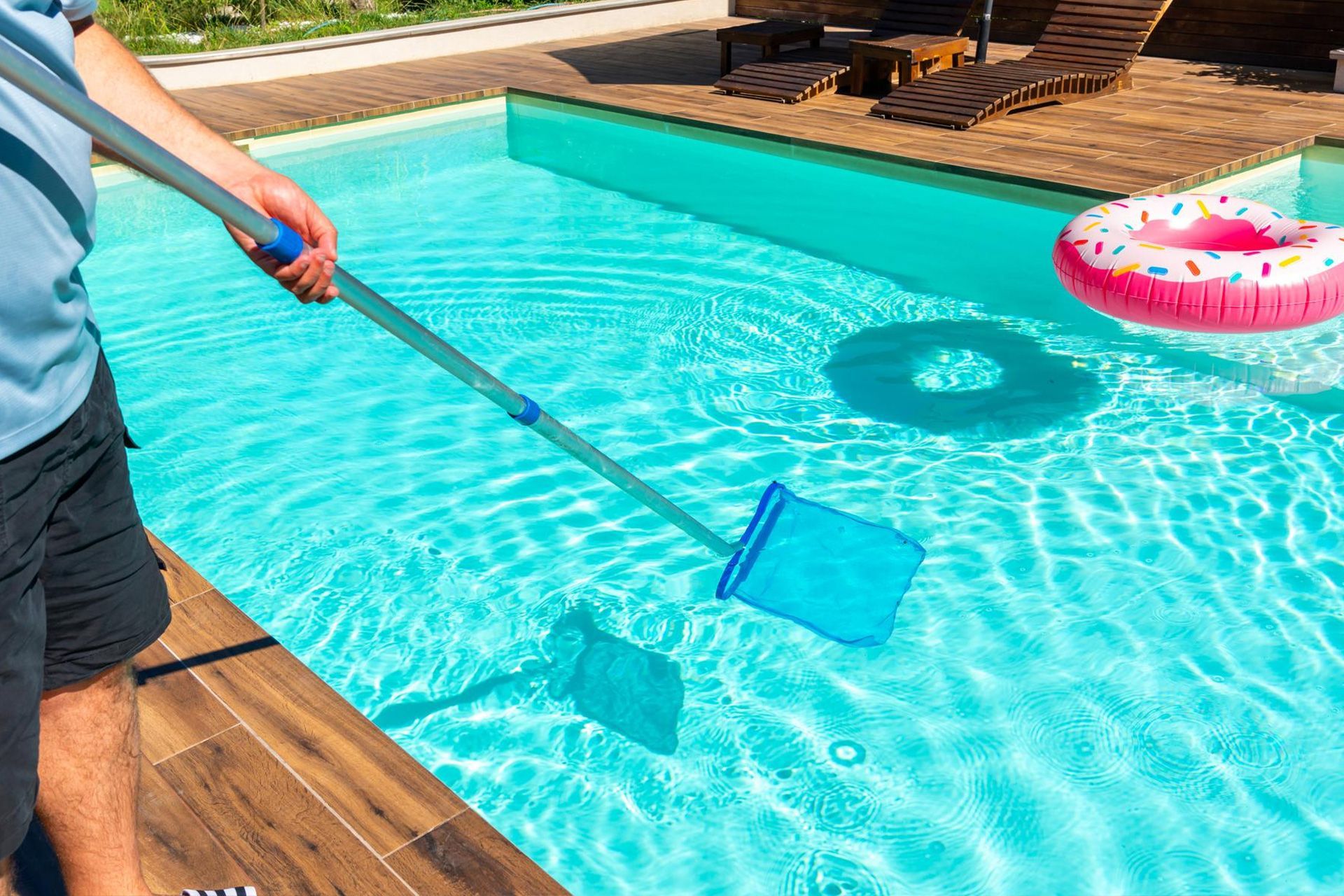
Use a skimmer or pool net to remove visible debris. Empty accessible skimmer and pump baskets if you know how to do so safely.
Do not allow wet leaves and dirt to remain in the pool longer than necessary.
Check the Water Level
Heavy rain may raise the water above its normal operating level.
An overly full pool may not skim the surface properly. However, do not drain water without understanding where it will go or how the pool system works. Improper draining can create other problems.
Contact a pool professional when you are unsure.
Test the Water
Check the sanitizer, pH, and other important water levels.
A complete chemical check may include:
- Free chlorine
- pH
- Total alkalinity
- Calcium hardness
- Stabilizer
- Salt level for saltwater pools
- Total dissolved solids when appropriate
Testing helps you treat the actual problem instead of guessing.
Brush the Pool
Brush the walls, steps, corners, and other areas where algae may begin to grow.
Even when the water still looks clear, brushing can help prevent buildup on pool surfaces.
Check Water Circulation
Make sure the system is running and water appears to be moving normally.
Watch for:
- Weak return flow
- Air bubbles
- Unusual equipment sounds
- A pump that loses prime
- A full basket
- A major change in filter pressure
These signs may point to a circulation or equipment problem that needs attention.
Can You Swim in a Green Pool?
You should not assume green water is ready for swimming.
Green water may be caused by algae, improper chemical balance, metals, poor filtration, or a combination of problems. The water should be tested and the cause should be identified first.
Do not use the pool when:
- You cannot clearly see the bottom
- Chemical levels are outside the proper range
- The water has a strong or unusual odor
- The filtration system is not working
- Algae are covering pool surfaces
- A technician has advised you to wait
Clear visibility is also important because swimmers and objects in the pool must be easy to see.
Is Green Pool Water Always Caused by Algae?
No. Algae are a common cause, but they are not the only cause.
Certain metals in the water may react with pool chemicals and create a green or tinted appearance. A filtration problem may also leave the water cloudy or discolored.
A professional water test can help separate an algae problem from a metal, chemical, or equipment issue.
Adding more chemicals without testing may make the problem harder to correct.
How Long Does It Take to Clear a Green Pool?
The time depends on:
- How dark or cloudy the water is
- How long the problem has been present
- Whether the equipment is working
- The condition of the filter
- The amount of debris in the pool
- The type of algae or water problem
- How quickly the water chemistry responds
A light algae problem may improve sooner than a pool that has been green for several days. Severe cases may require repeated testing, brushing, filtration, and treatment.
No responsible pool company should promise an exact result before checking the pool.
How Can You Prevent Green Water After Rain?
Regular care is the best defense.
Helpful steps include:
- Test the water on a consistent schedule
- Remove debris before and after storms
- Keep baskets clean
- Maintain proper circulation
- Brush pool surfaces regularly
- Clean or service the filter when needed
- Check saltwater generator performance
- Address equipment problems quickly
- Schedule weekly pool maintenance
A pool that is already balanced and maintained is usually easier to restore after a storm.
Why Professional Pool Service Helps
A green pool is not always solved by adding one chemical.
The water balance, filter, pump, surfaces, and circulation system all affect the result. An experienced technician can inspect the complete pool and determine which parts of the system need attention.
Jama Pools provides pool cleaning and chemical check services for residential and commercial properties throughout Palm Beach County. Our team checks the water, removes debris, reviews visible equipment conditions, and recommends practical next steps based on the pool’s needs.
Get Your Pool Clear Again
Do not let green water keep you from enjoying your pool.
Jama Pools provides pool cleaning, chemical checks, equipment service, and ongoing maintenance in Boca Raton, Boynton Beach, Delray Beach, Greenacres, Jupiter, Lake Worth Beach, Palm Beach Gardens, Royal Palm Beach, Wellington, and West Palm Beach.
Call 561-228-4111 or request an appointment online.
Frequently Asked Questions
Why Does My Pool Turn Green So Quickly After Rain?
Heavy rain can dilute chlorine, affect pH, and carry debris into the pool. These changes may reduce the sanitizer’s ability to control algae. Warm South Florida weather may then allow algae to become visible quickly.
Should I Add Chlorine Before or After Rain?
Pool water should be tested before making chemical changes. Preparing before a storm may help, but adding chemicals without knowing the current levels can create an imbalance. Follow product directions or ask a pool professional.
Does Rainwater Lower Pool Chlorine?
Heavy rain can dilute pool water and increase the amount of debris the chlorine must treat. Both conditions may reduce the amount of sanitizer available to control algae and maintain clean water.
Can a Dirty Filter Make My Pool Green?
Yes. A dirty or poorly working filter may reduce circulation and make it harder to remove particles from the water. Water chemistry and filtration should both be checked when a pool turns green.
Why Is My Pool Green Even Though the Chlorine Is High?
The pH may be outside the proper range, circulation may be weak, algae may remain on surfaces, or metals may be changing the water’s color. A full water and equipment check may be needed.
How Often Should Pool Water Be Tested During Rainy Season?
Homeowners should test the water regularly and after major weather changes. Pools with heavy use, repeated storms, or recent chemical problems may need more frequent checks than pools with stable conditions.
Share
RECENT POSTS